Contents
While hanging out in a Facebook group over the course of a few hours, I noticed this question asked several times: “How should I price my Kindle book?” The options for Amazon’s Kindle Direct Publishing system can be confusing unless you approach Kindle pricing from a strategic position.
The powers that be over at Amazon Kindle Direct Publishing are smart. They initially set up the KDP (Kindle Direct Publishing) program to sell competitively priced eBooks.
They knew that if they put the power of pricing eBooks into the hands of the authors and publishers, they could end up with any range of prices. After all, eBooks on websites have been priced $97, and sometimes even higher.
To keep people from running wild pricing eBooks way beyond their real market value, KDP decided to offer authors and publishers an incentive. And no incentive is as good as money.
KDP users can choose if they want to make 70% “royalty” (aka profit per eBook sale) or 35% royalty. The catch is, to make 70% of users must price their eBooks competitively—between $2.99 and $9.99.
The lowest price of $2.99 keeps the content from being devalued while keeping it at a no-brainer investment for consumers.
Anything lower than $2.99 and many consumers begin to wonder if the content inside is worth it unless the description of the eBook states the eBook is unusually short (30-60 pages).
So why would anyone want to price outside that magical range of higher profit margins? Because sometimes the content demands it.
Lead Generation
Kindle books used for lead generation are usually short, powerful bursts of information. They’re typically priced between 99 cents and $2.99, due to their shorter length and ability to capture people onto the author’s list for future follow-up.
Lead-generating eBooks have a call to action inside them (sometimes in several places) designed to entice the reader to visit a website for an extra free goodie—typically something only available to Kindle readers.
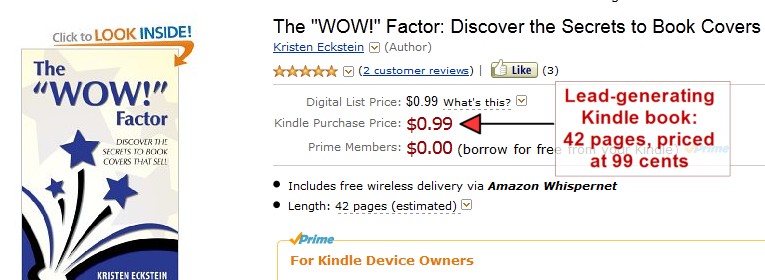
For example, my lead-generating eBooks have a call to action to receive a free webinar via a clickable URL. Readers who wish to access that extra free gift visits the website (either on their reader device or at a computer) and opt-in to my list to receive the webinar.
I have that opt-in page hooked up to an autoresponder system like Aweber that automatically adds them to my e-zine list and a system of messages designed to continually educate, inspire and reach them with more content.
This system creates a level of trust so when the few sales announcements come across their Inbox, they’re more likely to view them than hit the delete button.
With the 99-cent price point I set my lead-generating Kindle books at, it’s a no-brainer for people to purchase the eBook and it’s an easier sell for them to sign up for my additional free webinar.
Also Read: Sell More Books on Amazon – Understanding Keywords, Categories, and Amazon’s Algorithms
Core Content
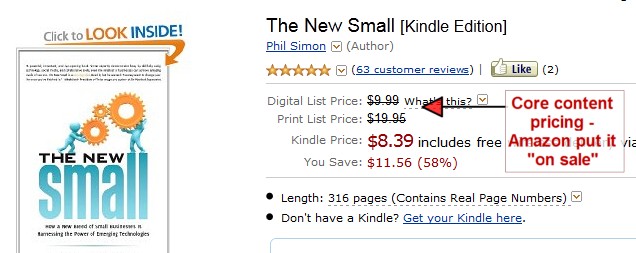
Core content books are those that are meant to be read, devoured, notated, and referenced. They’re the books you’d see in the business section of a bookstore. These books typically start their lives in print and then get released in eBook format.
They’re the types of books people buy to learn as much as they can about a specific topic. They include a lot more meat than just the main points about a topic.
These are eBooks priced between $2.99 and $9.99. They’re considered “trade” titles—mainstream topics that may have a lot of competition but sell well anyway as each book covers parts of topics not covered by other books on the same subject.
Specialty Books
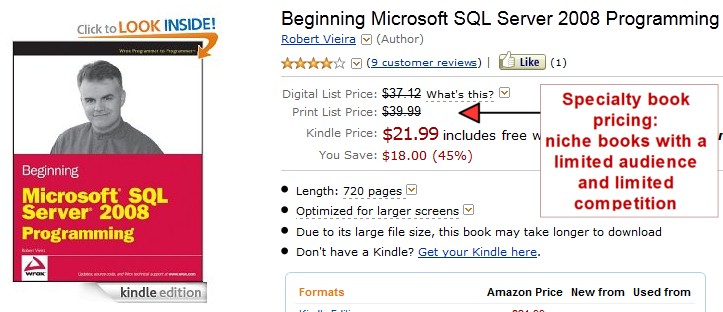
Specialty books include textbooks and niche books on specific topics like SQL programming. The tighter the niche, the harder it is to find quality information, so the higher the price can be.
Specialty books are seen priced at $14.99 or even higher. I’ve even seen some eBook format textbooks selling for almost $200. At those prices with no print cost, a 35% KDP royalty isn’t too shabby compared to 70% of a $9.99 book.
Also Read: Which eBook Publishing Platform is Best?
Fiction
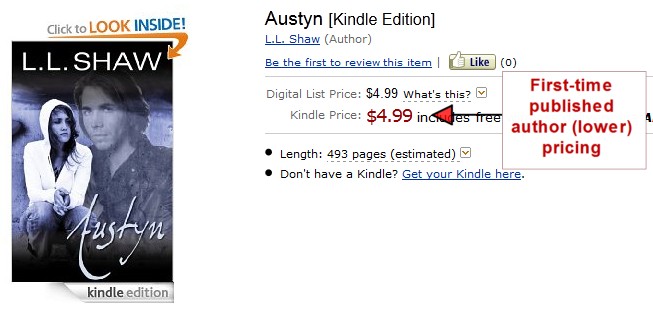
Fiction is weird. I’ve seen novels priced at $2.99 and $14.99. Other than the name of the author, there’s no difference in the variety of fiction. I would recommend for unknown or first-time authors, fiction be priced closer to $2.99.
For authors who have built a platform of followers and know they will sell thousands of books based on their existing cult following, a higher range of pricing closer to $9.99 will work.
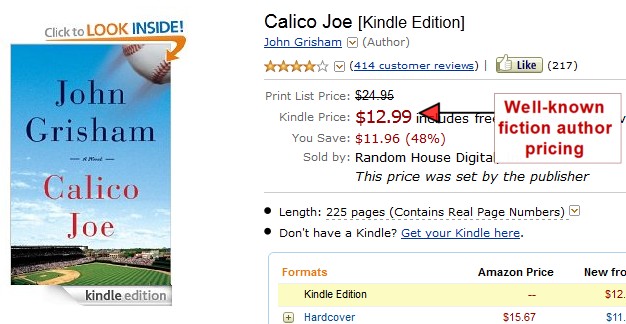
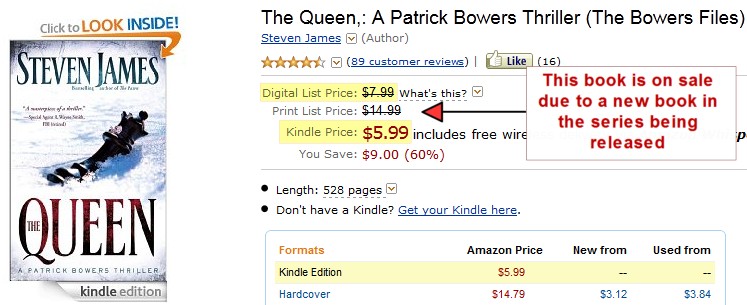
Traditional publishers of fiction will put previous books on sale for a lower price (or free) when the next book in a series is released by a popular author. This drives more sales for a short time and also brings more attention to the latest release.
I hope this detailed description of pricing strategies for Kindle helps you set a price that works for your readers and adds more money to your bank account. I’d love to hear what you think about Kindle pricing strategies in the comments below!